A transatlantic cruise crosses the Atlantic Ocean between Europe and North America or the Caribbean. Most take somewhere between six and sixteen nights, with long, relaxing stretches at sea. There are two main kinds: Cunard’s regular ocean liner crossings between Southampton and New York on Queen Mary 2, and the seasonal crossings other lines make when they move ships between Europe and the Americas each spring and autumn.
In this guide
Here’s how each type works, the routes and seasons, what life at sea is like, and how to choose the right crossing for you.
The two types of transatlantic cruise
1. The classic ocean liner crossing
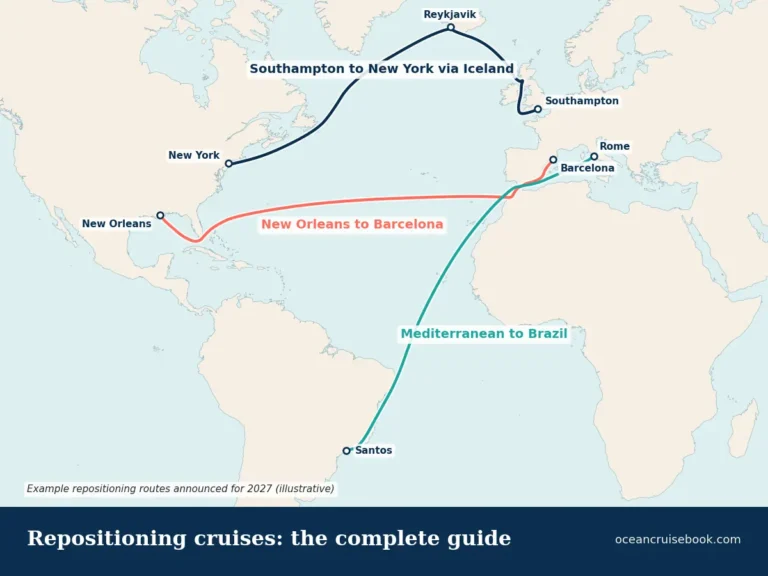
Cunard’s Queen Mary 2 is built for the North Atlantic and sails regular crossings between Southampton and New York. A westbound crossing in June 2027, for example, takes 7 nights from Southampton to New York, with six days at sea in between. Cunard plans to celebrate Queen Mary 2’s 500th transatlantic crossing in 2029, with celebration voyages departing from Southampton, Liverpool or Hamburg.
Cunard also combines the crossing with other regions, such as longer voyages that add New England and Canada, or round trips from Southampton that cross to New York and back. Read our Cunard review to see what the line is like on board.
2. Seasonal repositioning crossings
Many cruise lines move ships across the Atlantic twice a year: towards Europe in spring for the Mediterranean and Northern Europe summer season, and back towards the Caribbean and Florida in autumn for the winter. These one-way sailings are a type of repositioning cruise, and they often offer good value per night.
Popular transatlantic routes
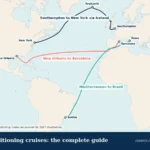
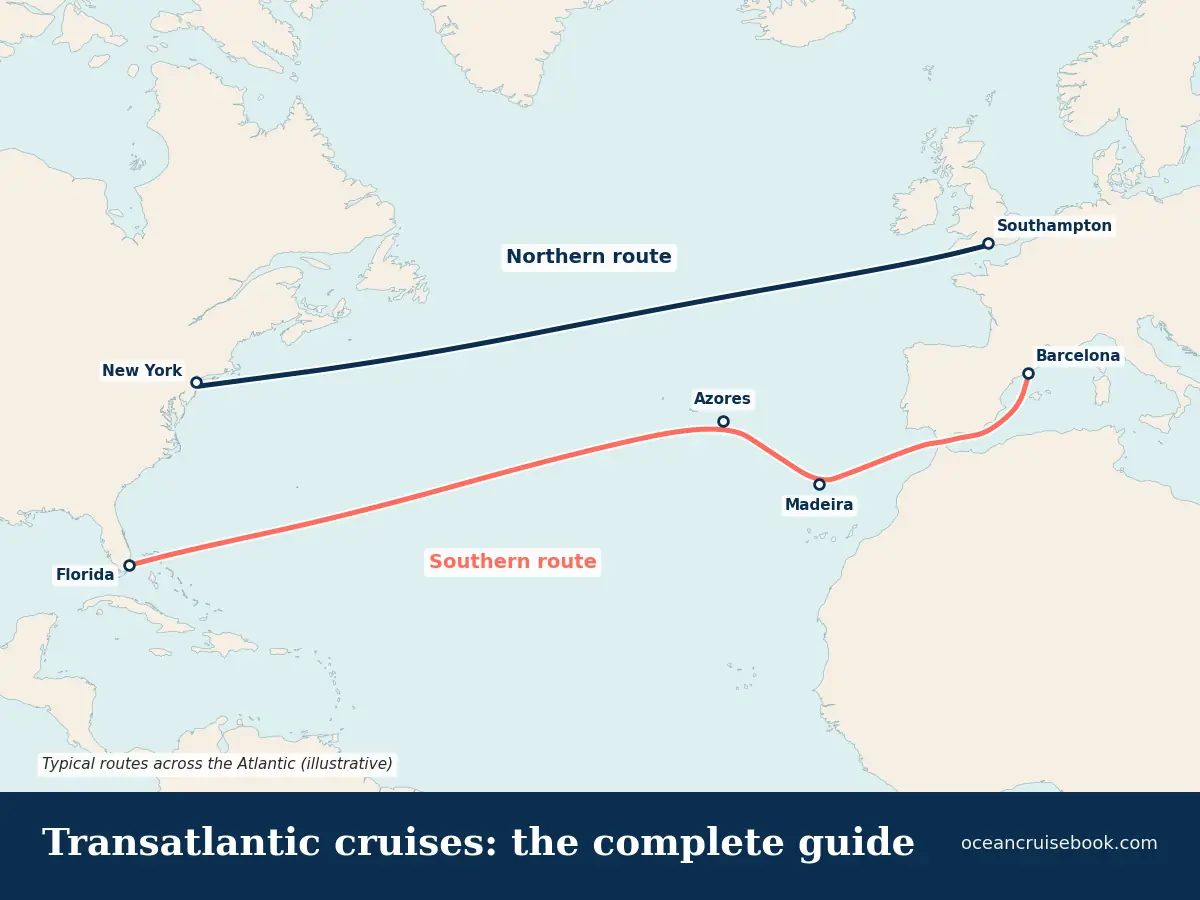
- Southampton to New York (and back): the classic northern route, usually direct across the ocean with no ports in between.
- The southern route: crossings between the Mediterranean or Spain and Florida or the Caribbean. These often call at Atlantic islands such as Madeira or the Azores, breaking up the sea days with a port visit.
- Via Canada and New England: longer voyages that combine the crossing with ports in North America.
- From the US Gulf coast: some ships cross from Texas, such as a Royal Caribbean sailing from Galveston to Barcelona in March 2026.
When do transatlantic cruises sail?
- Eastbound (Americas to Europe): mainly in spring, as ships head over for the European summer.
- Westbound (Europe to the Americas): mainly in autumn. Many of these crossings are scheduled for mid to late November, after the peak of the Atlantic hurricane season.
- Queen Mary 2: Cunard’s crossings run on a regular schedule through much of the year rather than just in spring and autumn.
What is life on board like?
A crossing is all about the journey. With several days at sea in a row, ships fill the days with talks, classes, quizzes, shows and dances, alongside the pools, spa, library and restaurants. On Queen Mary 2, for example, Cunard’s fares include the Insights programme of guest speakers, the library, theatre shows, gala evenings and dancing in the Queens Room.
It suits people who love to slow down. Expect long breakfasts, afternoon tea, time with a good book and evenings dressed up for dinner.
The clock changes
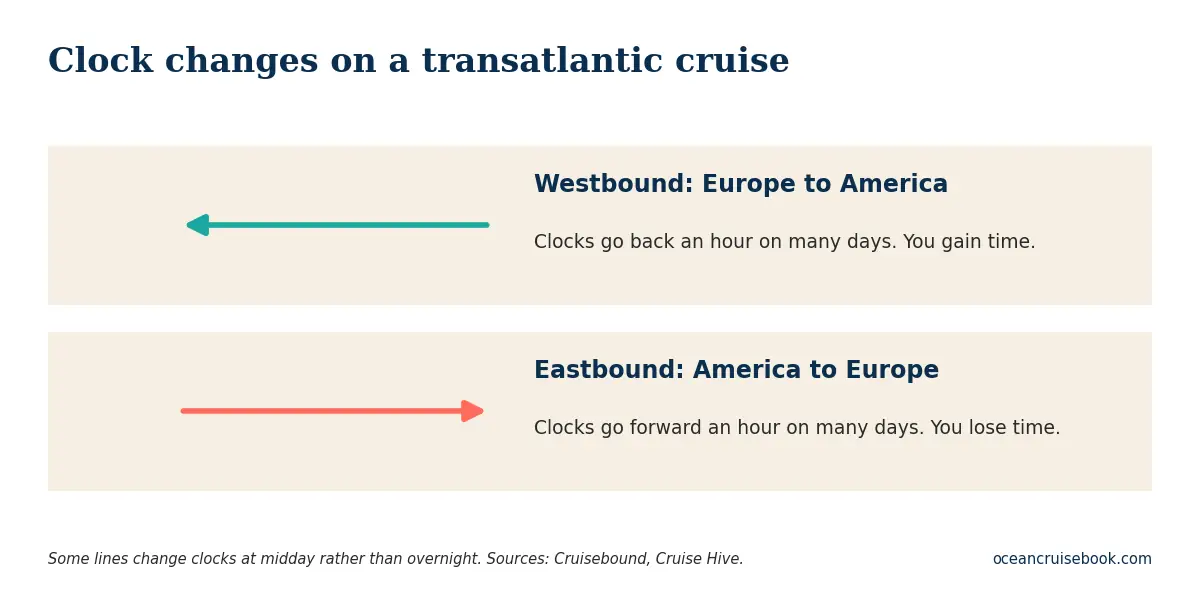
The ship crosses several time zones, so clocks change by an hour on many days of the crossing:
- Westbound (towards America): you put your clock back, gaining an extra hour.
- Eastbound (towards Europe): you put your clock forward, losing an hour.
Some lines change the clocks in the middle of the day on eastbound crossings rather than overnight. On Royal Caribbean’s Galveston to Barcelona crossing in March 2026, for example, six of the seven time changes happened at 2pm on sea days. Many travellers find a crossing is a gentle way to avoid jet lag, because the change happens an hour at a time.
Weather and sea conditions
The North Atlantic can be cool, windy and lively, even in summer, while southern routes are usually warmer. Pack layers and a warm jacket for time on deck. If you’re prone to seasickness, speak to a pharmacist or your GP about options before you travel, and consider a cabin in the middle of the ship on a lower deck, where movement is usually felt least.
Getting there and back
Because a crossing is one-way, you’ll usually need a flight for the other leg. One-way flights can cost more than a return, so price them before you book the cruise. Some fares include flights, which can make planning simpler.
From the UK, Cunard’s crossings are especially convenient: you can sail from Southampton and only need a flight home from New York, or fly out and sail home.
UK travellers entering the United States usually need an approved ESTA or a visa, whether arriving by air or by sea. Check the latest rules on GOV.UK before you book.
Which cruise lines sail transatlantic?
Cunard is the classic choice for a scheduled crossing. Many other lines make seasonal crossings when their ships move between Europe and the Americas, including Norwegian Cruise Line, Celebrity Cruises, Royal Caribbean, Viking, Virgin Voyages and luxury lines such as Regent Seven Seas. Each has a different feel, so choose the line you’d enjoy for a week or two at sea. Our Royal Caribbean review is a good place to start if you like big ships with lots going on.
How to choose your crossing
- Decide on direction and season. Spring crossings head east to Europe and autumn crossings head west. If you’re starting from the UK, a westbound crossing from Southampton means you sail first and fly home.
- Pick the style. A direct crossing gives you pure sea days. A southern route with island stops breaks the voyage up.
- Check the total cost. Add flights, hotels, transfers, gratuities and insurance to the cruise fare before comparing.
- Choose your cabin carefully. You’ll spend more time in it than on a port-heavy cruise, so a window or balcony is worth considering.
- Plan your days. Look at the daily programme, bring books and pick a few talks, classes or speciality dinners to look forward to.
Transatlantic cruise FAQs
How long does a transatlantic cruise take?
Usually six to sixteen nights. Queen Mary 2’s direct crossing between Southampton and New York takes 7 nights.
Is a transatlantic crossing rough?
It can be, especially on the North Atlantic, but conditions vary with the season and the route. Larger ships generally handle the swell better than small ones.
What is there to do on a crossing?
Plenty: guest talks, classes, shows, quizzes, dancing, the spa, pools and restaurants, plus time simply to relax.
Can I cruise to New York from the UK without flying?
Yes, Cunard’s Queen Mary 2 sails from Southampton to New York. You’d still need to fly home, or book a round trip that sails back.
Sources and further reading
- Cunard: Westbound Transatlantic Crossing, 7 nights (June 2027)
- Cunard: New voyages and the 500th Transatlantic Crossing
- Cruisebound: The best transatlantic cruises
- Cruise Hive: Royal Caribbean guests face seven time changes on transatlantic crossing
- Cruise Critic: What are repositioning cruises?
- GOV.UK: USA entry requirements
Found this useful?
Share it with someone planning a cruise.
Got a question?
Need help choosing a cruise?
Message us on WhatsApp and we'll reply as soon as we can.