What is a repositioning cruise? It’s a one-way sailing that moves a cruise ship from one part of the world to another when its season changes. A ship that spends the winter in the Caribbean, for example, might cross the Atlantic in spring to spend the summer in the Mediterranean. You board in one port, leave in another, and usually enjoy plenty of sea days and a lower price per night than on a standard round trip.
In this guide
Here’s how they work, when they sail, the routes to look out for, and the honest pros and cons, so you can decide whether one suits you.
What is a repositioning cruise? The key facts
- One-way: you start and finish in different ports, often on different continents.
- Seasonal: most sail in spring (roughly March to May) and autumn (roughly September to November).
- Length: anything from a short one- to three-night hop to voyages of nearly a month.
- Sea days: expect several days in a row with no port calls on ocean crossings.
- Travel home: unless the cruise starts or ends in the UK, you’ll need a one-way flight for at least one leg.
Why do cruise ships reposition?
Cruise ships follow the good weather and the holiday seasons. The Caribbean is busiest in the northern winter, while the Mediterranean, Northern Europe and Alaska come into their own in the summer months. When a season ends, the ship has to get to its next base, and rather than sail empty, cruise lines sell those journeys as cruises.
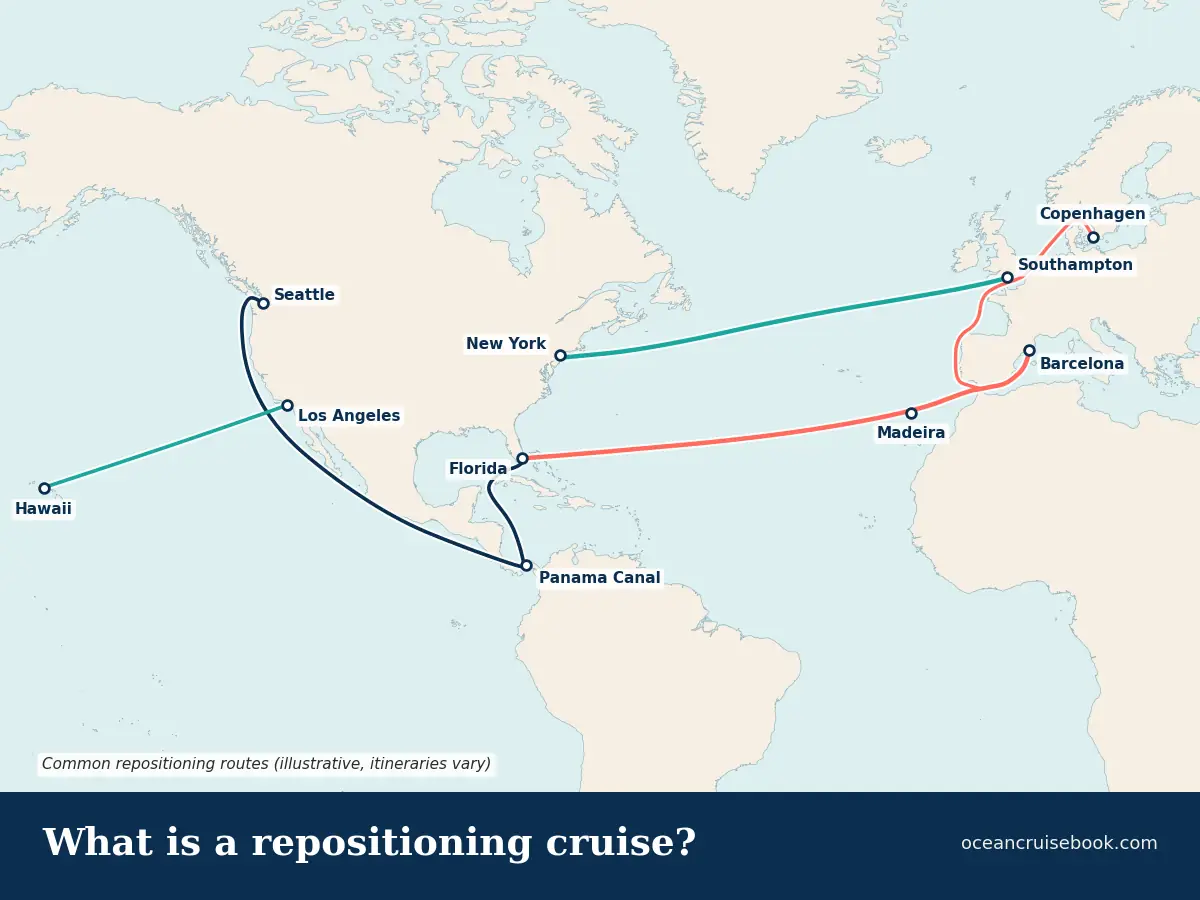
Alaska is a good example. Ships cruising there in summer have to leave when autumn arrives, and they head south to California, Hawaii or through the Panama Canal, before returning the following spring.
When do repositioning cruises sail?
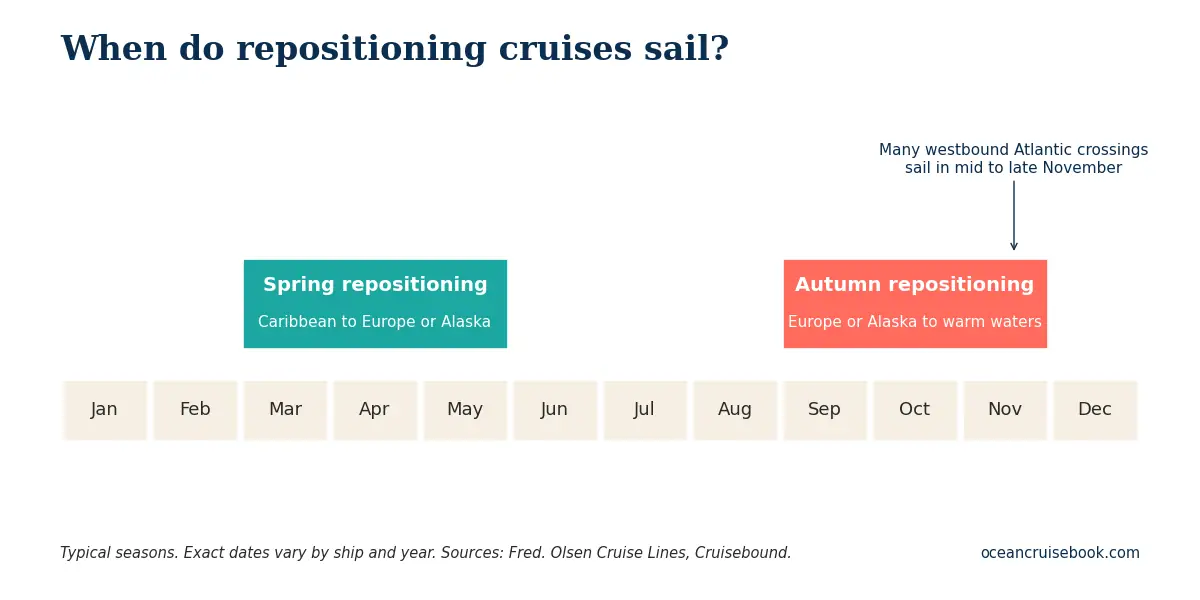
Most repositioning cruises happen twice a year, as ships move between their summer and winter regions:
- Spring (around March to May): ships leave the Caribbean and Florida for Europe, or head north towards Alaska.
- Autumn (around September to November): ships head back towards the Caribbean and other warm-weather regions for winter.
Many westbound Atlantic crossings in autumn are scheduled for mid to late November, after the busiest part of the Atlantic hurricane season.
The most common repositioning routes
Every year brings different ships and dates, but the same broad routes come up again and again:
Transatlantic crossings
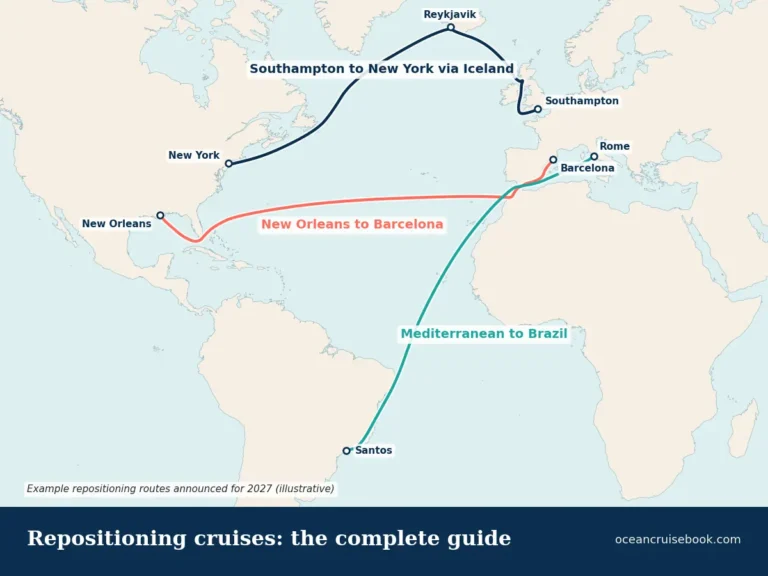
The best known of all. Ships cross between Europe and the Americas, for example from Barcelona or Southampton to Florida, New York or the Caribbean, and back again in the opposite season. Crossings usually take somewhere between one and two weeks, with long stretches at sea and occasional stops in places such as the Azores or Madeira.
Panama Canal
Ships moving between Alaska or the US West Coast and the Caribbean often go through the Panama Canal, which makes these sailings popular in their own right.
Pacific crossings
From the US West Coast, ships head out to Hawaii, or further across the Pacific to Japan, Australia or New Zealand. Some sail between Australia and Asia, calling at islands and Asian cities along the way.
Within Europe
Not every repositioning cruise crosses an ocean. Some simply move a ship from the Mediterranean to Northern Europe, for example from Barcelona to Copenhagen, ready for the summer season there.
Short coastal hops
A few are very short, such as one- to three-night sailings along the California coast or between Seattle and Vancouver. They’re a low-cost way to try a cruise line before committing to a longer holiday.
Repositioning cruises from UK ports
Good news if you’d rather not fly both ways: plenty of repositioning cruises begin or end at British ports, especially Southampton. A spring sailing might arrive in the UK from the Caribbean or the US, and an autumn one might leave the UK heading west. That means you can sail one way and only need a single flight for the other leg.
You’ll also see Cunard’s Queen Mary 2 crossing between Southampton and New York. Strictly speaking, that’s a regular scheduled service rather than a one-off move between seasons, but it offers a very similar experience: around a week at sea with no ports in between. Our Cunard review explains what the line is like on board.
The pros of a repositioning cruise
- Value per night: repositioning sailings often have lower daily fares than regular cruises, because lines need to move the ships anyway and sea days are a harder sell.
- More of the world in one trip: you sail from one region to another, so you see places that rarely appear on round-trip itineraries.
- A slower, relaxing pace: with fewer ports, there’s time for talks, classes, afternoon tea, the spa and good books. Many ships put on extra guest speakers and activities on sea days.
- Quieter ships: because they’re long and sail outside the school holidays, these voyages tend to attract more adults and experienced cruisers than families.
- A way to try a cruise line: short repositioning sailings can be an inexpensive introduction.
The cons to think about
- One-way flights: one-way or “open-jaw” flights (flying into one city and home from another) can cost more than a normal return, which can eat into your savings. Always check flights before you book the cruise.
- A low price per night isn’t always a low total: a 15-night crossing at a good daily rate can still cost more overall than a 7-night cruise.
- Lots of sea days: if you love busy port days, several days in a row at sea may feel long.
- Changeable weather: ocean crossings can be bumpy, especially on smaller ships, and you’ll pass through different climates on the way.
- Time: many repositioning cruises run for two weeks or more, so they suit people with flexible holidays or who are retired.
Who are repositioning cruises best for?
They’re a great fit if you:
- enjoy sea days and want a relaxing holiday rather than a busy sightseeing trip;
- have time to spare, perhaps because you’re retired or can take a longer break;
- like the idea of travelling between continents by sea rather than by air;
- want good value per night and don’t mind arranging a flight for one leg.
The choice of cruise line matters too. If you want plenty going on, lines such as Royal Caribbean and MSC have big ships packed with activities. For a calmer feel, look at lines such as Princess. For a classic ocean crossing, Cunard is the traditional choice.
How to find and book a repositioning cruise
- Start with the season. Decide whether spring or autumn suits you, then look at what’s sailing then. Many cruise lines and travel agents have a dedicated “repositioning” or “transatlantic” section on their websites.
- Check flights first. Before you fall for a cruise, price the one-way flight you’ll need. Some fares include flights, which can make the sums easier.
- Compare the total cost. Work out the whole trip: cruise fare, flights, hotels, transfers, gratuities and travel insurance. Then compare it with a regular cruise of similar length.
- Decide when to book. Popular sailings and the best cabins can sell early, but repositioning cruises are also known for last-minute price drops. If you’re flexible on dates and cabin, waiting can pay off. If you want a particular cabin, book earlier.
- Choose your cabin with care. You’ll spend more time in your cabin on a long crossing, so look at the deck plan and avoid cabins directly below busy venues if you’re a light sleeper.
- Read the small print. Check what’s included, the cancellation terms and whether you need any visas for the countries you’ll visit.
Practical tips for your first repositioning cruise
- Pack layers. You may start in spring sunshine and finish somewhere much cooler, or the other way round.
- Bring your own books and essentials. Onboard shops can be pricey, and the next port could be several days away.
- Plan your port days. With fewer stops, it’s worth making the most of each one.
- Think about seasickness before you go. Open-ocean crossings can bring rougher seas. If you’re prone to motion sickness, speak to a pharmacist or your GP about options before you travel.
- Join in. Talks, quizzes, classes and simply chatting with fellow passengers make sea days fly by.
What is a repositioning cruise? FAQs
Are repositioning cruises cheaper?
Often cheaper per night, yes, but not always cheaper overall. Add up the full cost, including one-way flights, before deciding.
How long are repositioning cruises?
They range from short coastal hops of one to three nights to ocean crossings of two weeks or more, and a few last nearly a month.
Are they good for first-time cruisers?
A short repositioning sailing can be a gentle introduction. A long ocean crossing suits people who already know they enjoy sea days, so if you’re new to cruising, it’s worth trying a shorter cruise first.
Is there enough to do on all those sea days?
Ships usually lay on more daytime entertainment on sea days, such as guest speakers, classes, quizzes and shows, plus the pools, spa and restaurants. If you enjoy reading and relaxing, you’ll be in your element.
Do I need a visa?
It depends on where the cruise goes. UK travellers visiting the United States, for example, usually need an approved ESTA or a visa. Check the requirements for every country on your itinerary on the GOV.UK foreign travel advice pages before you book.
Sources and further reading
- Cruise Critic: What are repositioning cruises and why take one?
- Cruise Critic: 10 things not to do on repositioning cruises
- Fred. Olsen Cruise Lines: Repositioning cruises guide
- Cruisebound: The best transatlantic cruises
- GOV.UK: Foreign travel advice
Found this useful?
Share it with someone planning a cruise.
Got a question?
Need help choosing a cruise?
Message us on WhatsApp and we'll reply as soon as we can.